
Every Man Needs a Fight
What Jiu Jitsu teaches us about stress, strength, and being truly alive.

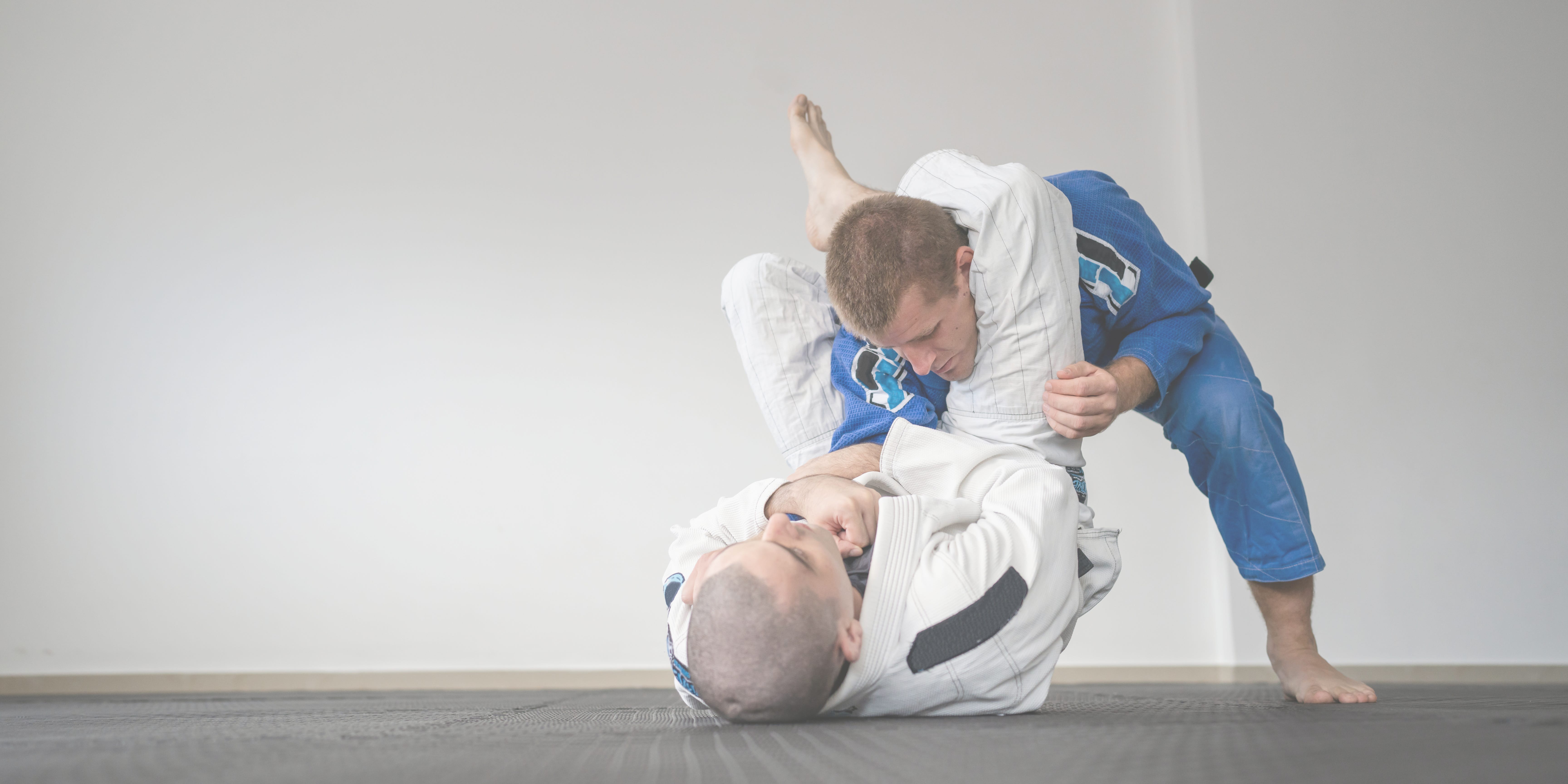
Modern man has become soft. We sit in our opulent, plush recliners in climate-controlled rooms, typing on glow-screens, arguing about nothing, worrying about everything, and convincing ourselves that we’re “stressed.”
We live lives padded with comfort yet overwhelmed by the busyness, distractions, and constant rings, dings, and pings that exhaust us far more than physical exertion ever would.
We sleep poorly.
We gain weight.
We lose strength.
We avoid physical exertion—and then wonder why our minds feel foggy and our spirits feel thin.
Want the antidote to this state of modern malaise?
It’s not another productivity hack.
It’s not a meditation app.
It’s not a new morning routine with a cold plunge and a $14 matcha (still not totally sure what that even is).
It’s learning to engage in real physical struggle again.
And few things train that better than Brazilian Jiu Jitsu. But, in reality, any martial art that forces you out of your comfort zone, pushes you physically, and gives you a chance at live sparring to hone your skills will do.
Below is the framework—and the research—to show why.
Physical Exertion: You Can’t Be in Your Head When Someone’s Trying to Choke You
Jiu Jitsu forces you out of your head and into reality.
You’re not ruminating about tomorrow’s meeting when someone is trying to pass your guard. You’re not obsessing over emails while defending a choke. You’re definitely not thinking about office politics when you’re fighting for your life.
And this physical engagement—this presence—changes the mind.
In fact, research has shown that training jiu jitsu can have a big impact on mental health, distraction, and emotional regulation. Take this 2023 randomized controlled trial in Abu Dhabi. The researchers took 88 sixth-grade boys and assigned them to:
Two weekly BJJ classes, or
Two weekly traditional PE classes
Over 12 weeks, the BJJ group showed significant reductions in:
Emotional symptoms
Hyperactivity & inattention
Externalizing behaviors
Total difficulty scores
Translation: movement rooted in struggle sharpened their minds and settled their behavior more than standard exercise.
Struggle clarifies.
And the body becomes a doorway to a calmer mind.
It’s funny, when I first started training jiu jitsu, I was going through a season of serious struggle at the business. We were trying to hire and recruit clinicians, battling declining insurance reimbursements, and navigating some challenging contract issues.
It impacted my sleep, distracted me during family dinners, and interrupted my prayer times in the morning.
But, after a few weeks of training, I began to notice a change. Those stressors seemed to vanish during class. A 220-pound purple belt pinning you in side control will do that. More importantly, however, I began to see those challenges as “not that big of a deal.”
Sure, they were real challenges and struggles that I had to endure, but in the grand scheme of things, they began to look more manageable.
I like to joke that, if you spend a few days a week trying to fight off someone who’s trying to choke you out, the stress of the office just doesn’t seem that big.
The key then, is to take that newfound presence and funnel it into the good: your family, your vocation, your duties. The saints called us to this long before sports science caught up.
“It is not the actual physical exertion that counts towards a man’s progress, nor the nature of the task, but by the spirit of faith with which it is undertaken.” - St. Francis Xavier
Do the hard things. Get on the mats. But use it with the intention of becoming a better man.
Humility, Confidence & Capability: The Paradoxical Path to Becoming a Strong Man
Walk into a jiu jitsu gym for the first time and experience instant humility. A teenager who weighs 40 pounds less than you will make you question if you’re even capable of fending off a trained toddler.
It’s not humiliation. It’s formation.
The reality is, many struggle at this stage. They feel embarrassed, incapable, and weak. They let their wounded ego drive them away from the challenge ahead of them.
Stick with it long enough, and your capabilities grow through humility and perseverance.
Because true confidence is not bravado.
It’s not ego.
It’s not the illusion of strength.
It’s capability built through humility and the steady application of focused effort.
And you can see it in BJJ athletes as they progress in the sport. A 2025 study comparing BJJ athletes by rank found that higher belts consistently showed:
Greater mental strength
Higher resilience
Stronger self-control
Higher self-efficacy
Greater life satisfaction
Better overall mental health
And no increase in aggression.
And this progression mirrors the spiritual life: humility leads to discipline, discipline to mastery, mastery to strength.
Every man needs a place where pride dies and real capability grows.
The great saints talk about how important it is to kill pride in your life.
“It was pride that changed angels into devils; it is humility that makes men as angels” -St. Augustine
Someone recently asked me why I made the decision to put my 3 boys and oldest daughter in jiu jitsu.
My answer?
It’s good for them to get smashed a little bit, to experience being uncomfortable, to fight through that discomfort, and to grow in the humble confidence that only comes through live sparring against skilled, resisting training partners.
You grow to know yourself in a deep way when you face that sort of resistance. It grows both confidence and competence. And, more importantly, it happens in real life, in real rounds, against real people; not on some screen or through some computer interface.
Knock Out Stress & Anxiety: Struggle Is the Medicine
I once heard a neuroscientist and psychologist discussing the anxiety epidemic we’ve seen develop over the past decade. It seems the number of people being diagnosed with some anxiety disorder grew exponentially in a short period of time.
I remember when I was a professor in a graduate health sciences program. It seemed like an overnight change. We may have had 1-2 students out of a cohort of 40-45 who needed some special educational or testing accommodation for anxiety back in 2015. By 2018, it seemed that a quarter of the students or more had some sort of accommodation.
This neuroscientist defined anxiety as the belief that we won’t be able to handle what’s coming. We see some hardship, challenge, or struggle on the horizon, and we either 1) can’t see a clear path through or 2) feel we are unable to surpass it. That resulting feeling is anxiety.
Anxiety doesn’t just impact our professional or personal lives. Great saints exhort us to rid ourselves of anxiety, as it has a spiritual impact on our lives.
“Anxiety is the greatest evil that can befall a soul, except sin. God commands you to pray, but He forbids you to worry,” -St. Francis de Sales
Why is anxiety such a great evil? Because it can lead us to shy away from the struggle and the challenge before us. And when we shy away from the struggle, it reinforces the idea that we’re unable to overcome it.
I’d argue that much of modern anxiety comes not from trying too hard, or doing too much; but from doing too little that actually matters.
Jiu Jitsu helps alleviate symptoms of anxiety by improving mental toughness. In fact, research highlights that combat sports, including Jiu Jitsu, increase mental toughness by improving resilience and self-confidence.
When you train Jiu Jitsu consistently, you get tested physically, mentally, and emotionally. And, when you start you gain skill and competence, that success and progress carries over to other areas of life. In fact, some researchers go so far as to describe Jiu Jitsu as a form of somatic psychotherapy that helps improve assertiveness, self-confidence, self-control, patience, empathy, improved sleep quality, and mindfulness.
All this points to a simple fact: struggle and challenge aren’t enemies. Avoidance is.
Become Present: Jiu Jitsu Drowns Out Distraction Like Nothing Else
Step onto the mats and a few things happen automatically:
Your phone gets placed far away from your body.
Notifications vanish from your awareness.
The rings, pings, and dings that tend to drive much of our modern behavior fade into irrelevance.
During training, only one thing matters: what is happening right now.
You breathe.
You move yourself.
You respond to your training partner’s pressure and direction.
Jiu Jitsu acts like a turbocharged mindfulness session. It becomes a training ground for attention in a world addicted to distraction.
But it’s more than “mindfulness”. It’s deeper than that: embodied attention, the kind men develop through work, risk, and responsibility.
What I’ve found, is that presence carries over into work, marriage, and fatherhood. I look at my phone less. I make more eye contact with my kids and my wife. And I notice, experience, and enjoy more in my time with them.
The Takeaway: Every Man Needs a Fight
The modern world lulls you away from struggle. It tempts you with comfort and distraction, keeping you tied to some glowing screen that swallows your attention, connecting you to other people showing the highlights of their lives, arguing about inconsequential things, and wasting time that should be spent doing something meaningful.
But we’re built for more than passive consumption and placation. We’re built for struggle, for challenge, for a fight.
Jiu Jitsu gives you the opportunity to struggle and grow in the very traits that modern life erodes through comfort and ease:
Strength (physical and mental)
Humility
Competence
Focus
Presence
Resilience
Mental clarity
A man becomes strong by learning to struggle well.
If life is making you anxious, weak, or distracted…
if your spirit feels thin…
if you’ve let comfort and passivity lead you into anxiety and worry…
start with one simple action:
Find some mats. Start training. Learn to fight a little.
Become the man God intends you to be.
References
[1] Bueno, J. C. B., Andreato, L. V., Silva, R. B., & Andrade, A. (2023). Effects of a school-based Brazilian jiu-jitsu programme on mental health and classroom behaviour of children from Abu Dhabi: a randomised trial. International Journal of Sport and Exercise Psychology, 21(6), 1091–1106. https://doi.org/10.1080/1612197X.2022.2109184
[2] de Lorenco-Lima L, Gaines SA, Waterbury EM. Rank-Based Psychological Characteristics in Brazilian Jiu-Jitsu Athletes: Mental Strength, Resilience, Grit, Self-Efficacy, Self-Control, Aggression, Life Satisfaction, and Mental Health. Journal of Functional Morphology and Kinesiology. 2025; 10(2):100. https://doi.org/10.3390/jfmk10020100
[3] Weinberger, K., & Burraston, T. (2021). Benefits of Brazilian jiu-jitsu in managing post-traumatic stress disorder: A longitudinal study. Journal of Community Engagement and Scholarship, 13(4). https://doi.org/10.54656/msfa1684
[4] Morris, B., & Bone, A. (2024). Brazilian jiu jitsu and wellbeing: An inductive thematic analysis exploring how BJJ can increase subjective wellbeing. Mental Health and Social Inclusion, 28(6), 1149-1162. doi:https://doi.org/10.1108/MHSI-11-2023-0116
This is the precise reason that I love my chainsaw. Running a chainsaw focuses your attention so that everything else seems to vanish. You have to zoom in when the tool you're using could easily cut off your arm.